
The table stakes for television broadcasters have always been complying with the rules and regulations laid down by the FCC. Technology early on was such that broadcasters had to strictly transmit signals that the FCC deemed legal. Some of the restrictions were due to the fact that television receivers, which were much less sophisticated than they are today, could recover those signals. Broadcasters were given a public monopoly, so they were highly regulated.
It was always a given that most broadcasters would never willingly move to new technology unless forced to. Those forces could come from other broadcasters. But usually, those forces were imposed upon them from outside the broadcast community.
The late Julius Barnathan, when he was Vice President of Operations & Engineering at ABC, claimed that Japan brought forth HDTV because the NTSC TV receiver industry was saturated. Sony and others wanted a new market.
A number of broadcasters and companies proposed HDTV systems. At that time, Japanese broadcasters and vendors, like Sony, Panasonic, and NHK, worked closely together. The United States electronics industry was very sensitive at the time that "Japan, Inc." was going to dominate another technology sector. The U.S. folks decided they had better do something themselves.
In 1980, the Society of Motion Picture and Television Engineers (SMPTE) became interested in HD. Birney Dayton was one of the technical chairs. He co‐chaired the working group on HD electronic products from 1980 to 1984, which met in Hollywood.
By the mid‐80s, the FCC saw the need to act. In 1987, it created the Advisory Committee on Advanced Television Service (ACATS). This group would recommend an advanced TV standard for the U.S.
Dayton represented Grass Valley. The company wasn't working on HD at the time. Still, he believed they wanted to appear active.
By 1991, ACATS cut the proposals to six. This list included four all‐digital HDTV specs. ACATS teamed up with the ATSC (Advanced TV Systems Committee). This private group started in 1982. The ATSC developed the "Advanced TV" (ATV) specifications. They also included SD formats in the standard to ensure compatibility with computers.
In 1995, the ATSC approved the ACATS ATV Standard, and a year later, the FCC did the same.
Two methods were suggested for modulating digital media and other data onto an RF carrier. The first scheme is known as COFDM (Coded Orthogonal Frequency Division Multiplexing). This is a form of spread spectrum transmission.
The other contender was 8‐bit Vestigial Sideband Modulation, or 8VSB. This innovation was possible due to the processing power that became available in the '90s.
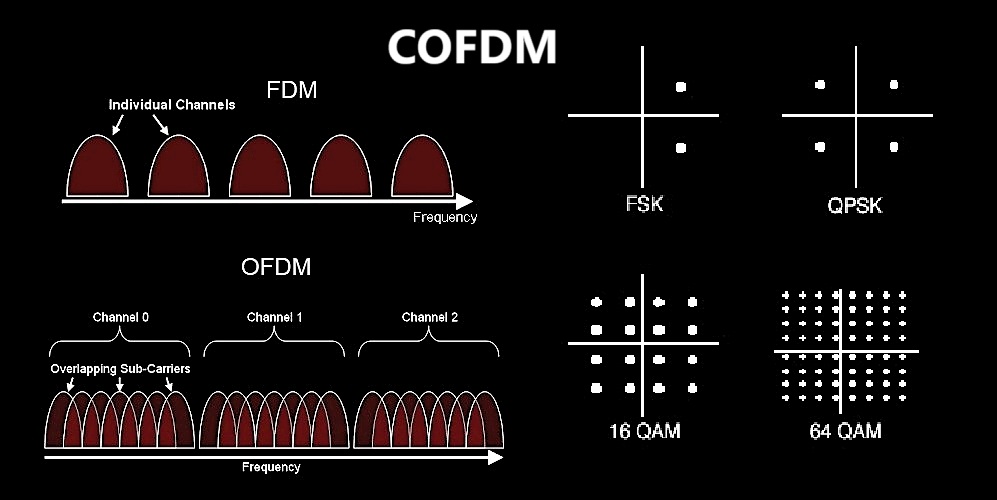
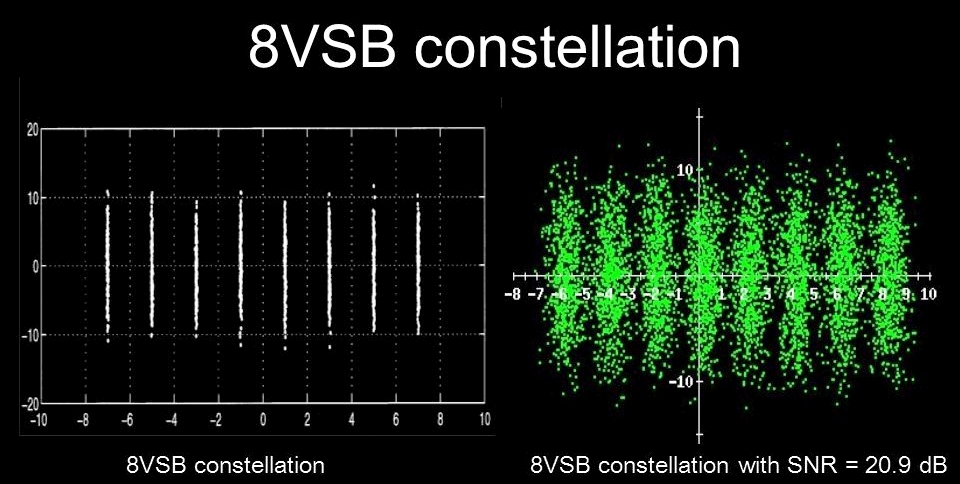
The debate between the two approaches highlighted their small advantages against one another. COFDM has an "urban advantage." It handles multi‐path signals well, which are signals bouncing around in city centers.
8VSB is said to have a "fringe advantage." 8VSB signals provide stronger average signal strength. This improves coverage in remote areas, benefiting viewers further out. Studies showed that the number of viewers affected by one method was nearly the same as the number affected by the other method!
There was also an early difference of opinion about whether ATSC would carry SD or HD.
Broadcasters were forced to do DTV. To many, this meant only a DTV transmitter initially. That made television transmitter companies happy. That made broadcast equipment vendors like Sony, Philips, and Tektronix less so. While the average broadcaster was not against DTV, they just did not want to get critically injured by it. Many were hoping for DTV's demise. Cable companies, along with the PC industry, were in that camp.
HD eventually opened a lot of new territory. One of the biggest was the replacement of film in the film industry.
Early HD equipment cost 10 times what today's does.
Technology used for DTV created a decoupling of production, transmission, and display formats. The industry has now been through several evolutionary steps as analog video faded into the past. Each new milestone gave the vendors a short boost in sales for these features, but then there was another drop.
New media formats opened up new markets through technology. Conversely, others with similar yet different skills were now finding ways to compete in markets once ruled by traditional TV companies.
Let's examine what Grass Valley was working on as NVISION launched into HD. This was a chaotic period right before the century turned.
Both Tek and GV were having problems. During the first half of the '90s, Tek had slashed 8,000 jobs. At GV, the problems were mirroring those of Tek. GV’s reputation slipped as commitment to customers fell short. Product development slipped, and GV wasn't improving its working capital position. The group was now mainly reacting to outside events and not pioneering on any fronts.

In 1994 GV President Castles observed that the company wasn’t working smart. “We had made commitments to substantial customers for products we were not ready to deliver; and in some cases, when we did deliver products, they weren’t working as advertised. It’s nothing that only happened here, but I think it happened too often here.”
Headwinds increased when Fjeldstad became president of the Tek Video Systems division in 1995. Castles now reported to her. It was not a good sign when she said “I haven’t made any decisions to change anything yet. We’re just starting to evaluate where to take video, and Tek and GV.”
1995 was the GV's best year for contributing to Tek's bottom line. It was 23.1% of total revenue that year. But over the next two years, that percentage fell back to just under 16%.
Finally, in '96, GV released its first digital router, an SD version of the 7000. That year also marked a major advancement in bringing digital to the home; the DVD was introduced.
By the end of 1997, it was obvious that GV was not pulling its financial weight. Timothy Thorsteinson became president of the division in late August. He took over from Lucie Fjeldstad. We looked at that saga in a previous article.
Incidentally, Thorsteinson added one final bit to that episode. He said, "the person I replaced wanted to exit the switcher business. The roadmap I inherited had a big X for the plan for switchers the next year." They had already exited the modular business. The business they originally cut their teeth on. Now he found that Fjeldstad planned to also exit their marquee market. Tim noted that the plan he received said, "video was going to be a 'datatype on a heterogeneous network.'" Today, that idea is true. But not 25 years ago.
In September '98, Jerry Meyer, Tek's CEO and chairman, announced plans to simplify products in the video division. He also aimed to cut costs. Those meant layoffs, which had become a tradition towards the end of each fiscal year.
Although GV still had a strong brand name, its video sales had experienced a significant decline. From a management meeting in early 99 the following bottom line was: "Lack of accountability leading to... loss of confidence. GVG is a deteriorating asset."
In June of 1999, Tektronix decided it didn't have the resources or the patience to fix the problems. Also, on a bigger scale, the company finally chose to do what Soros and his group wanted: break up the company. Besides casting off Grass Valley, Tektronix split its test and measurement business from its printer business. Xerox ended up buying the printers division. Test and measurement kept the Tektronix name.
Tek received two lowball offers for Grass Valley from Leitch and Pinnacle. Then, there was an offer from 3Com, which had recently bought US Robotics. US Robotics had bought PalmPilot. That deal never came together.
Terence J. Gooding, a technologist based in San Diego, took an interest in acquiring GV. He had briefly looked at NVISION, as we mentioned in a previous article. Tek's president, Meyer, knew Gooding from his purchase of Wavetek. Wavetek and Tek were competitors in some areas. Wavetek was often the lower‐cost or field‐oriented alternative to Tektronix instruments. Both companies sold into telecom, broadcast, and RF markets. Gooding had recently sold Wavetek and was flush with cash.
Gooding flew up to Portland and met one‐on‐one with Thorsteinson in Building 27. He had a yellow notepad, and Thorsteinson said he took copious notes. At the end, Gooding asked Thorsteinson if he bought GV would he "run the business." Thorsteinson said yes. Gooding said, "I am going to write Meyer a check." He bought it for cash; he also assumed GV's accounts payable. There was also a note involved. Purchace price ended up around $46 million. Tektronix kept a 10% equity stake in the new venture.
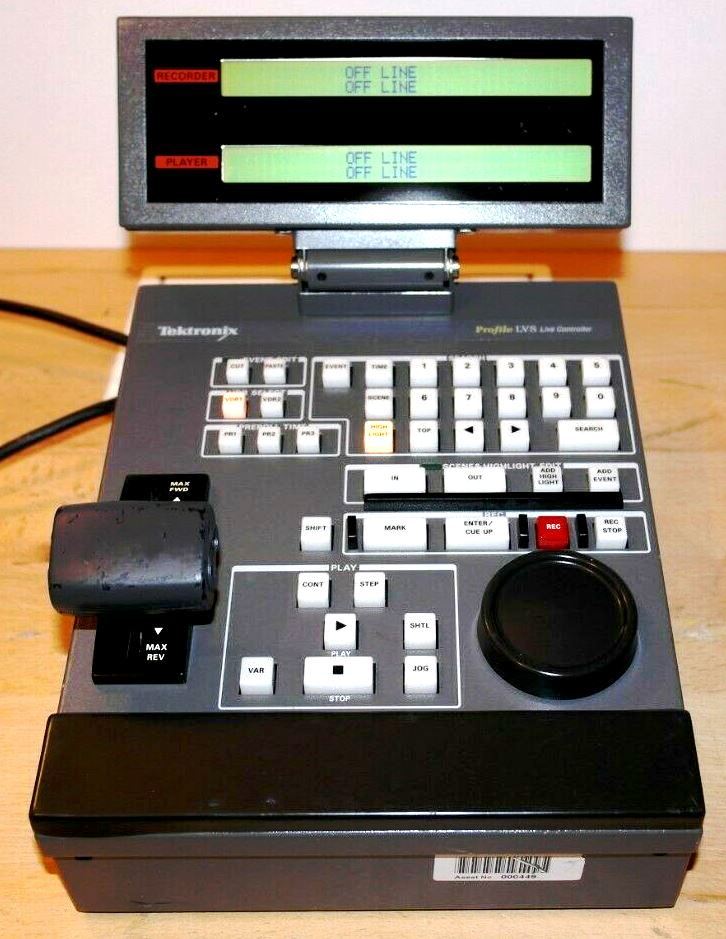
On Aug 10, 1999, Tektronix announced the sale 0f its video content production business to Gooding. This included the Profile servers.
The company was now the Grass Valley Group, Inc. For a long time, Tek had dropped the Group from the Grass Valley name; it became the Grass Valley Group once again.
Gooding was the only serious bidder. He saved the brand. The new company had 700 employees worldwide and annual sales north of $200 million. At that time, it was claimed that 80% of TV signals worldwide passed through GVG products.

This is the start of a 20+ year journey as Grass Valley wanders from one camp to the next. We pick up that story in the next article.
