

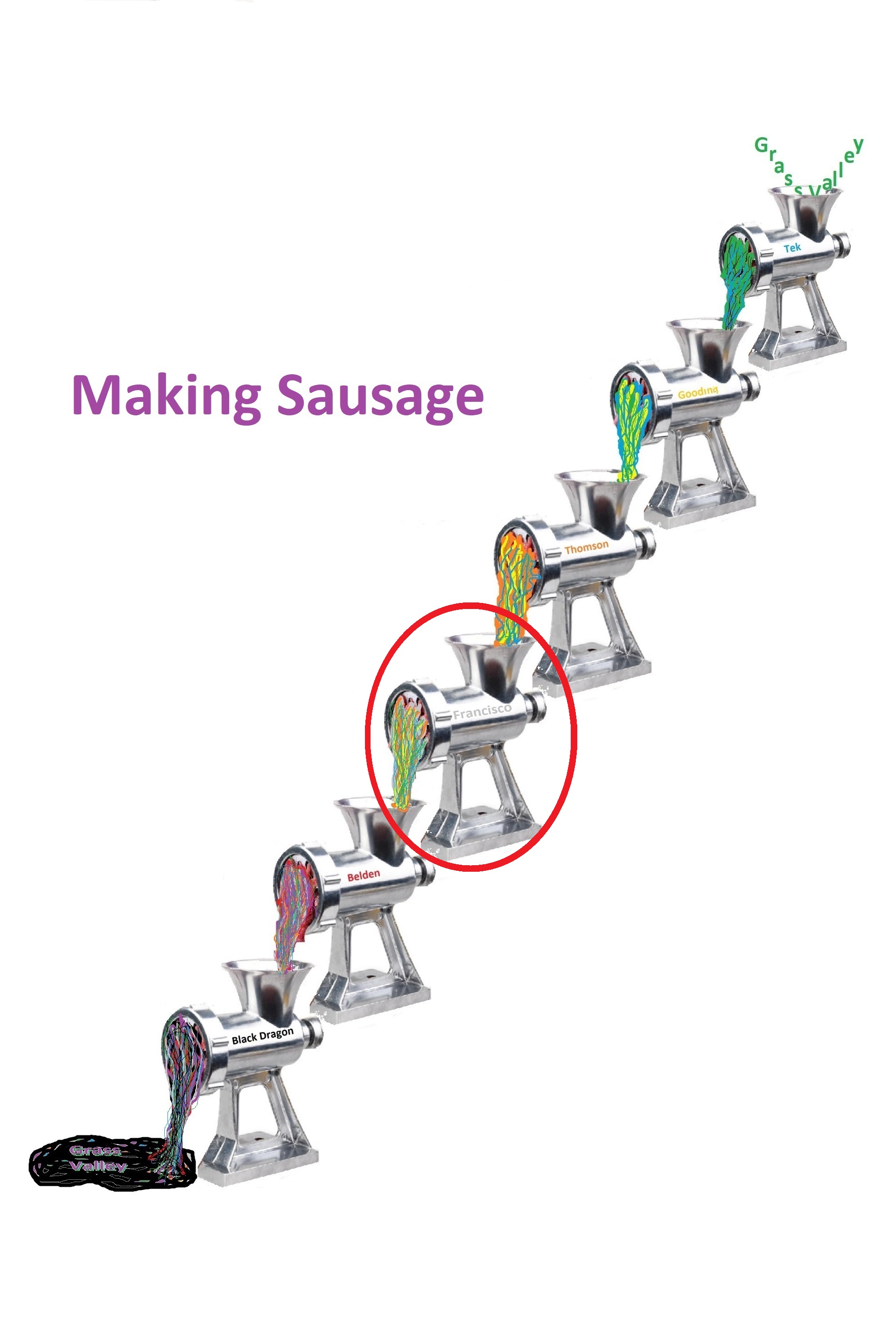

On January 1, 2011, Grass Valley became an independent company again. Francisco Partners, a venture capital firm in San Francisco, bought the company. It was yet another fire sale of the company. It then operated from offices in San Francisco, California. This change included all the extra products acquired from Thomson.
Francisco Partners invested in technology and technology-enabled businesses. They saw themselves as "turnaround artists." They invested in repositioning, recapitalizing, and rejuvenating companies. That was something the GV conglomerate desperately needed. The deal was put together by David Golob and Brian Decker.
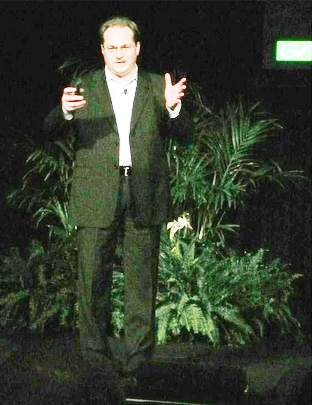
They brought in a Silicon Valley guy. Alain Andreoli joined Francisco Partners as the CEO of Grass Valley. He was the President of Sun Microsystems Europe. Sun's acquisition by Oracle in 2011 resulted in him moving on to Francisco Partners. Andreoli said the new management was committed to restoring Grass Valley to its former glory. To many, the brand was not as pure as it once was. Many could look at equipment throughout their facility and see the various incarnations of GV and Thomson. Maybe even an old Tek/GV logo on plenty of routers, servers, and cameras. Some going way back to the old GVG logo with the two mountain peaks. Andreoli said Francisco Partners was ready to invest millions over time to restore the shine.
He joined Sun Microsystems in January 2008. He was the Senior Vice President for Europe, the Middle East, and Africa. He oversaw sales and services that made up almost 40% of the company's business then. He previously served as CEO of Hubwoo, a France-based software company. It was known as a source-to-pay solutions provider. A source-to-pay (S2P) solutions provider offers software and services. These tools help organizations manage the entire procurement process from start to finish. The company ran "The Business Network." This platform linked buyers and suppliers for electronic trading. He had held earlier leadership roles in other tech firms.
Andreoli was aghast at all the custom hardware Grass Valley built. He said that from then on, the company would use off-the-shelf (OTS) computers for everything. Déjà vu, 14 years hence! Maybe Fjeldstad was just too soon?
Andreoli shifted focus to IT-centric, file-based, and software solutions. This change emphasized integration and cost efficiency. It aimed to move away from fragmented proprietary systems.
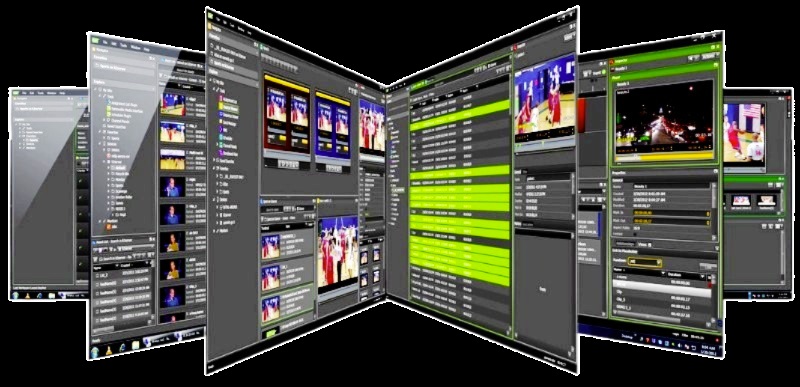
Andreoli's view was radically computer-centric. The industry was moving toward that camp, but it wasn't ready for "prime time" yet. The processing power and Internet bandwidth just weren't sufficient.
He said the world was moving toward both wired and wireless connections through the Internet. The argument was that broadcasters had to do the same. He said vendors would need to shift from selling specialized hardware. Instead, they should focus on offering solutions and services. He was exactly right, as we will see in later articles, just wrong about the time frame.
He foresaw one other revolutionary development. The rise in variable operational costs that would replace a lot of capital spending. That meant that the market would reduce large, upfront investments in long-term assets, like specialized hardware, servers, or equipment. . These capitalized items are listed on the balance sheet and depreciated over time. They provide tax benefits. However, they require a big upfront cash investment and a long-term commitment. Ongoing expenses that grow with usage, like electricity, maintenance, cloud subscriptions, or pay-as-you-go services, would rise significantly. They are expensed right away. They change with activity levels and are usually predictable. However, they can rise as operations expand.
Bottom line: reduce CapEx on specialized "video boxes," but increase variable OpEx for compute power, storage, or processing.
Again, he was predicting the future. Not what was possible at that time.
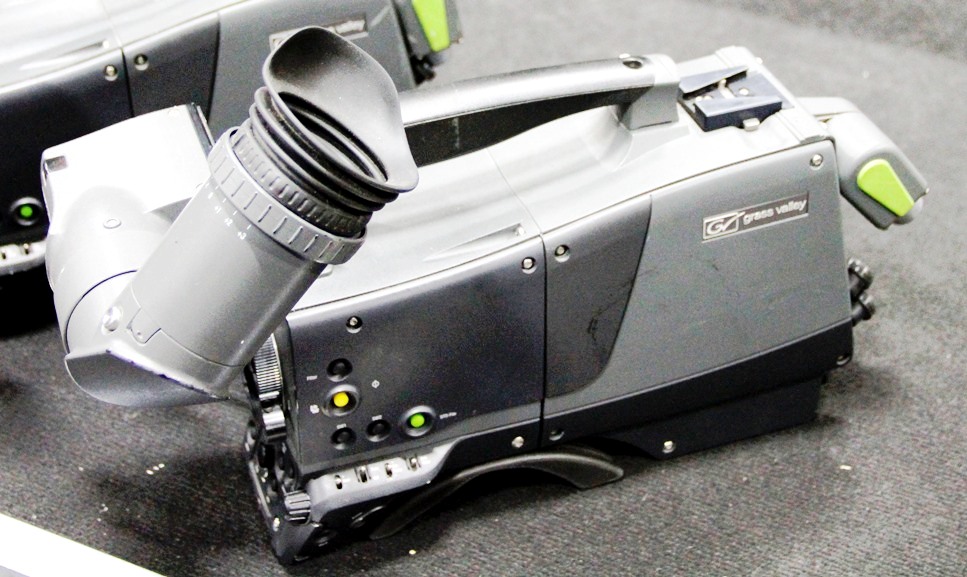
The company needed new products. Their routers were getting long in the tooth. LDX cameras, out of the Netherlands, were a bright spot.
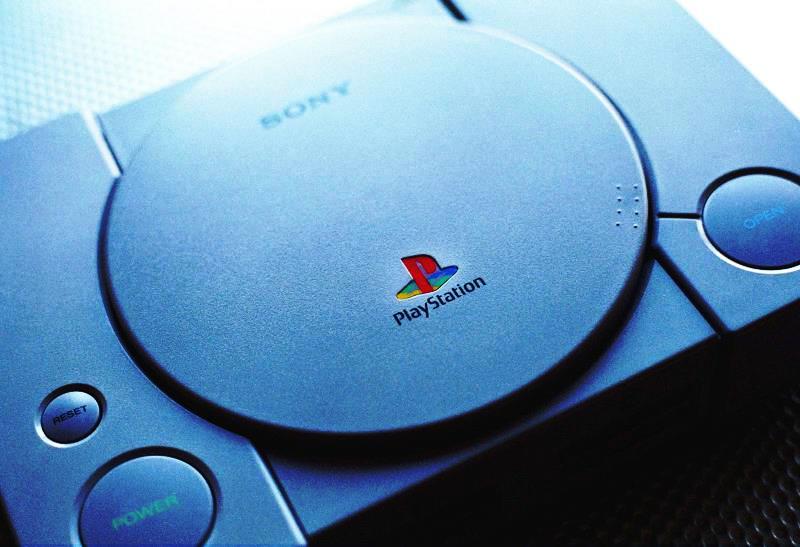
Another sign of things to come: Half-jokingly, it has been suggested that Sony Broadcast high-end hardware might be reduced to residing in a Playstation.
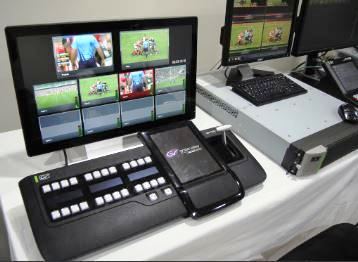
A bright spot for the GV switcher line was the K-Frame. Development started under Thomson ownership. While not revolutionary to the extent Andreoli wanted, it was a dramatic push ahead. He wanted OTS hardware without any changes to the underlying drivers. Only customizations he believed would be at the application layer. Once again, just a few years too soon.
The K-Frame debuted alongside the Kayenne Video Production Center in 2009. It launched Grass Valley's "Any Surface, Any Engine" approach. That is, any panel can connect to any K-Frame variant. The Kayenne/K-Frame combo supported up to 4.5 M/Es (mix/effects banks). It included features like DoubleTake (split M/E) and in/out format conversion.
The plan:
Emphasize modularity
Consider software licensing for upgrades
Add 4K or more M/Es without swapping hardware
Ensure future-proofing
The K-Frame offers huge I/O options, with up to 192x96 I/O. It supports up to 9 M/Es. You also get IP/ST 2110 connectivity and can integrate with tools like ClipStore.
The K-Frame family allowed for an increasingly software-centric architecture. Eventually culminating in cloud versions. Early K-Frames used special hardware. After 2010, the move to IT/COTS and full virtualization sped up. This product kept the company relevant as the IT and SAAS revolution grew.
Other products introduced during this era included the Stratus. It was introduced at NAB 2011. It was a cloud-based software platform. It handled everything from ingesting to managing, editing, and playing media assets on K2 servers/SAN. It mainly targeted workflows for news and production.
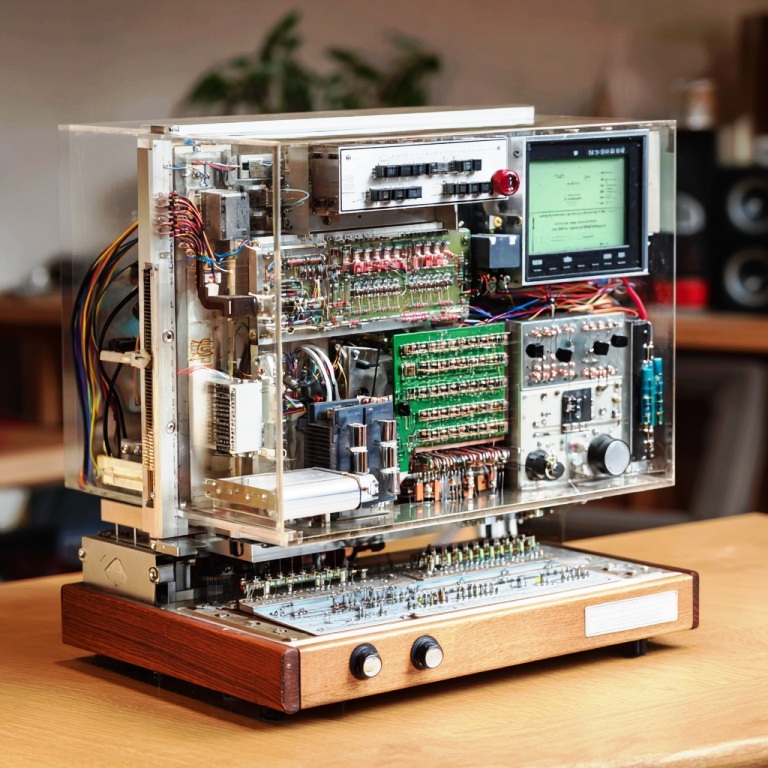
The K2 Edge came out in 2011–2012. This followed the acquisition of PubliTronic in October 2011. PubliTronic was a Netherlands-based provider of automated broadcast playout systems. It was centered on its NEXUS family of integrated playout platforms. The product comprises a video and audio delay server with integral branding functionality. This expanded Grass Valley's multichannel automated playout capabilities for mid-market broadcasters.
The Karrera Video Production Center/Switcher came out around the same time as the K2. It was a mid-range production switcher that used the K-Frame engine. This setup offered affordable access to premium features. It included mixed formats and multilayer effects.
The earlier broadcast technologist sought "best-of-breed" solutions. Now, they might compete with the idea of "good enough." Earlier television technology was less reliable. Technicians and engineers, like today's IT workers, controlled what went on air. Then, what was seen as consumer-grade was better than the "broadcast quality" from ten years prior.
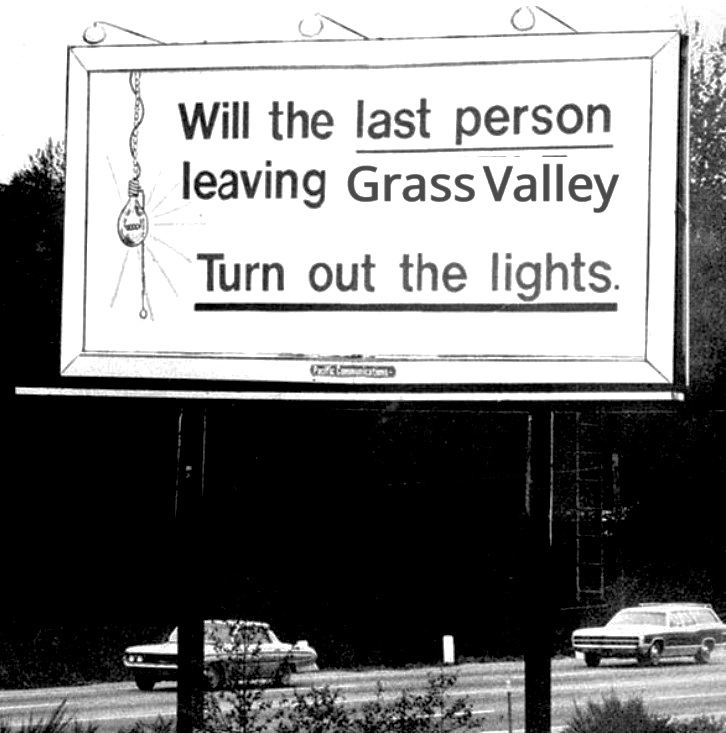
In July 2013, Grass Valley moved its last assembly and testing operations from Nevada City. This shift happened under Andreoli's leadership. This change led to the layoff of 34 local employees shortly afterward. In 2009, Grass Valley still had nearly 300 employees at its Nevada City facility. After another 10 percent cut the next year, the company had about 270 employees in Nevada City by 2011. After additional outsourcing, it was below 200.
At the end of that year, the increasingly wanderlustful company moved its headquarters to Hillsboro, Oregon, to an existing office inherited from Tek from its former Profile server digs in Beaverton.
GV employment in the area was falling fast. The company had facilities in several locations.
Burbank, CA
Norcross, GA
Montvale, NJ
Hillsboro, OR
Salt Lake City, UT
Miami, FL
They also operated in Canada, various European countries, Dubai, Russia, Japan, Australia, New Zealand, and a handful of other Asian countries.
It was quickly becoming a global citizen, loosely tied to its birthplace.
Alain Andreoli stepped down in 2013. He had better success after GV. Andreoli joined Hewlett Packard Enterprise (HPE, then HP) in 2013. He held progressively senior roles, including leading Hyperscale Computing, Servers, and Datacenters. He became Executive Vice President and Group President of the Hybrid IT Group. This group is HPE's core business, which includes servers, storage, and High Performance Computing. He worked at HP for over seven years. During that time, he shaped much of the company's strategy. This included the 2017 acquisition of SGI. He left HPE in late 2018.
The writing was now on the wall.
Chuck Meyer was on a plane beside Ezra Perlman, who today is a Co-President of Francisco Partners. At the time, Alain Andreoli was getting ready to step down. As a provocative suggestion, Chuck suggested they hire Tim Thorsteinson. Thorsteinson was GV's president when Tek sold the company, and again when Gooding sold it. Perlman passed the suggestion on to Golob, who at the time was chairman of GV's board. As you recall, he was the Francisco partner instrumental in buying GV.
Thorsteinson had moved up the Tek ranks and ran GV before leaving in 2003. He then became president of Leitch. Before that, he was president of the broadcast communications division at Harris Corp., which acquired Leitch in 2005. He resigned from Harris in 2009.
Soon Thorsteinson was back holding the reins of GV. Some thought he came back to sell and cash out the investment for Francisco Partners. Mark Hilton was hired by Tek in Oregon. He moved to GV in the late 90s. In 2005, he left because he didn’t like what was happening with Thomson. Then, he worked at HP for nine years. Thorsteinson reached out to him and mentioned GV was going to be sold again. He wasn’t sure where or how they would use him, but it was an exciting time. Hilton felt interested. Hilton was the person who restarted the modular division after Fjeldstad had shut its R&D down in the 90s. He saw a chance to make another positive impact on the company.
During the second half of 2013, there was a huge fall in sales in the broadcast industry. Companies in the industry saw declines of 10–40% in sales. Part of that was the lull after the large extravaganza that NBC had put on for the London Olympics.
The Olympics often dictated the television equipment cycle. Two years before the Olympics, NBC would bulk up on the "latest and greatest" gear. Afterward, budgets were tight. Much of that gear went to the network's other facilities or was sold off. Then, famine would strike the equipment vendor industry. 2013 shaped up to be worse than normal. Also, Europe was still bouncing back from the 2008 economic crisis. This was especially true for Cyprus, Greece, Ireland, Portugal, and Spain.
More and more, products were being "commoditized." Standard platforms could handle more processing, so software became the valuable part. Grass Valley made plans to start selling software licenses for its products. This could create a nice revenue stream.
Soon, GV was no longer in the Francisco Partners portfolio. Belden took over in February 2014 for around $200 million. Francisco Partners walked away with around $50 million in profits.
Next article, we will look at how Belden couldn't make this work.
