 Sigma
SigmaSigma

I have on a few ocasions have been called on to use my expertize on antiquated equipment. That have included period exhibits at conventions and a trade show. Also for a movie that was never released.
The most interesting was for GE Nuclear. Gamma rays wipe out CCD sensors in modern cameras within minutes when they inspect a nuclear reactor. A secret for a long time is that gamma rays randomly hitting earth, in far less levels of course, will occasionally take out a cell in a CCD device. You would see them as a black spec in the picture. CCD cameras have circuitry to mask that spot. It uses either the charge from the preceding cell or, in better cameras, the cells on either side of the bad cell. Very high‐end cameras would interpolate the value from the eight surrounding cells.Many cameras checked for these dead pixels when you selected automatic black balance on the camera.
Back to cameras and nuclear reactors. To the rescue of modern technology, 50s and 60s technology. CRT imaging devices. Usually, it was a tube known as the vidicon. In other cases it was known as a plumbicon.
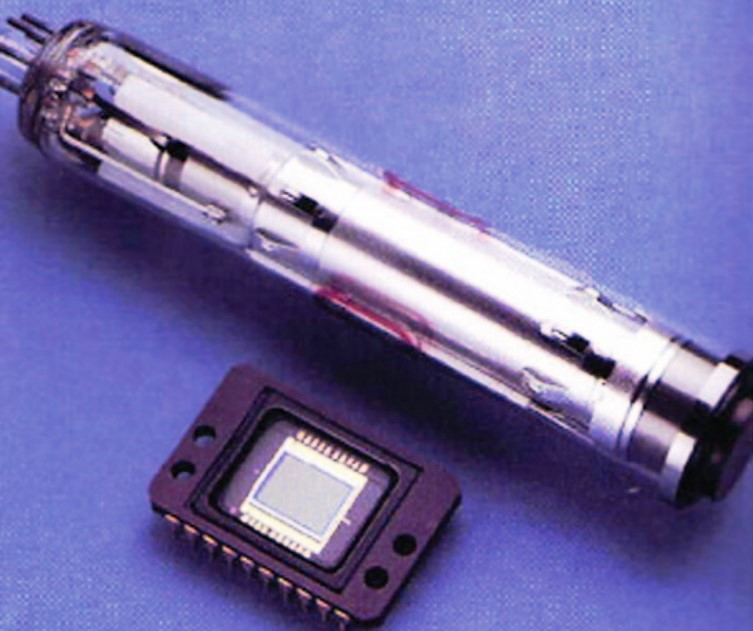

The photo on the left compares the latest imaging tube to a CCD sensor. The right photo compares three generations of imaging tubes. The large one on the left is an Orthicon tube, developed in the 40s. The center one is a Vidicon, developed in the 50s. The right one is a Plumbicon, developed in the 60s and updated through the 80s.
GE had a slew of vidicon cameras that needed to be "retubed" and re‐aligned. Through a roundabout path, they found me, who knew enough about cameras, new and old, to do that. These were cameras they had bought used, very used in some cases. So they had not been exposed to radiation yet.
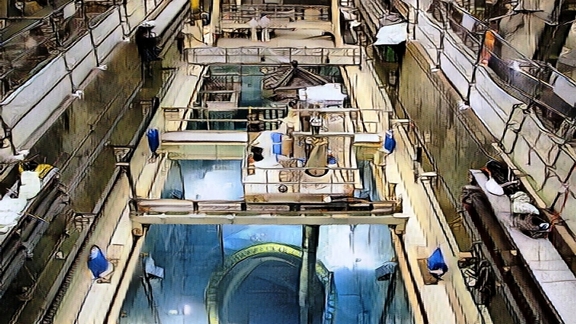 Equipment that had been inside a nuclear plant would be sent back in lead‐lined rail cars. It would be checked and repaired if needed. This activity was all done in what was called "hot zones." I took a half‐day training to work in "warm zones," where radiation levels were expected to be low. To work in the hot zones required multiple days of training. Something I elected not to do. Even in warm zones, I had to wear a dosimeter and be prepared to lose whatever I was wearing if I ever set off alarm bells. Which was possible upon leaving a warm zone. You went through what looked like a TSA scanner. But you had to stick your left arm down into a slot for the test. Never found out what that was about.
Setting up the newly acquired cameras took place in the warm zone. When a "hot" camera needed attention, I did what they do in a nuclear reactor. People trained for hot zones would point a camera at the inspected area. Then, engineers would direct what to do. The same with camera repair and setup.
